Quick answer
Lecithin is a mixture of phospholipids, fat-like molecules that include phosphatidylcholine. Soy lecithin comes from soybeans and sunflower lecithin from sunflower seeds. Sunflower lecithin is a popular soy-free choice. Both are sold as softgels, granules and liquids.
Lecithin
A mix of phospholipids
Main phospholipid
Phosphatidylcholine
Sunflower lecithin
Soy-free
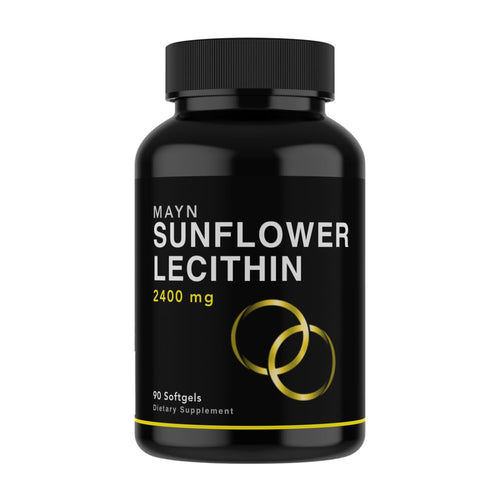
MAYN product
Sunflower Lecithin 2400mg, 90 softgels
What is lecithin?
Lecithin is the name for a group of phospholipids found in plant and animal cells. It's widely used in food as an emulsifier (it helps oil and water mix), which is why you'll see it on chocolate and salad dressing labels. Egg yolks are also naturally rich in lecithin.
Sunflower vs soy lecithin at a glance
| Sunflower lecithin | Soy lecithin | |
|---|---|---|
| Source | Sunflower seeds | Soybeans |
| Soy-free? | Yes | No |
| Common forms | Softgels, liquid, granules | Softgels, liquid, granules |
| Main phospholipid | Phosphatidylcholine | Phosphatidylcholine |

Featured in this guide
MAYN Sunflower Lecithin 2400mg with Phosphatidylcholine, 90 softgels
What is phosphatidylcholine?
Phosphatidylcholine is the most common phospholipid in lecithin and a source of choline. Labels sometimes list the phosphatidylcholine content separately from the total lecithin. See also Alpha GPC vs CDP Choline.
Tip: Compare the milligrams of lecithin per serve, and the phosphatidylcholine content if it's listed.
Frequently asked questions
Is sunflower lecithin soy-free?
Sunflower lecithin is made from sunflower seeds, not soy. Check the product's allergen statement.
Is lecithin a fat?
Lecithin is made of phospholipids, which are fat-like molecules.
Why is lecithin in chocolate?
It's an emulsifier that helps ingredients blend smoothly.
Keep reading
This article is general information only and is not medical advice. Always read the label and follow the directions for use. Dietary supplements should not replace a balanced diet. If you are pregnant, breastfeeding, taking medication or have a medical condition, speak with your doctor or pharmacist before taking a new supplement.