Quick answer
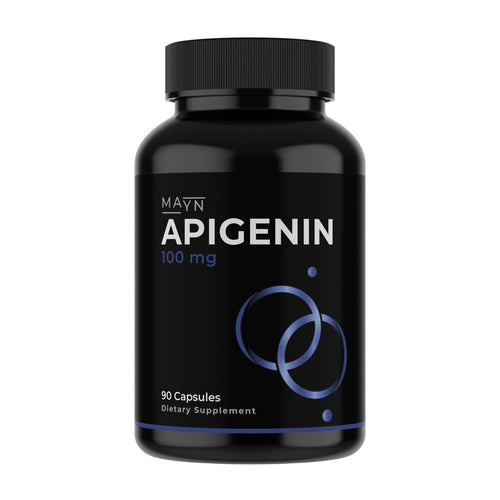
Apigenin is a natural plant compound called a flavone, a type of flavonoid. It's found in chamomile, parsley, celery and some other herbs and vegetables. Food provides small amounts; supplements such as MAYN Apigenin provide a measured 100mg per capsule.
Type
A flavone (flavonoid)
Best-known source
Chamomile
Also in
Parsley, celery, oregano, thyme
MAYN product
Apigenin 100mg, 90 capsules
Where is apigenin found?
| Food or herb | Apigenin |
|---|---|
| Dried parsley | Among the highest |
| Chamomile (dried flowers) | High |
| Celery and celeriac | Moderate |
| Oregano, thyme, peppermint | Low to moderate |
| Chamomile tea (a cup) | Small amount; varies with brewing |
Food and tea amounts vary widely with the plant, drying and preparation.
Tea vs capsule
A cup of chamomile tea contains a small, variable amount of apigenin. A capsule provides a consistent, measured amount, such as 100mg, which is far more than a typical cup of tea.

How apigenin supplements are made
Apigenin for supplements is commonly extracted from plants such as chamomile or produced to high purity. Check the label for the amount per capsule and the source.
Tip: If you're sensitive to plants in the daisy family (such as chamomile or ragweed), check the source and speak with your pharmacist.
Frequently asked questions
Is apigenin the same as chamomile?
No. Apigenin is one compound found in chamomile; chamomile is the whole plant.
Does chamomile tea contain apigenin?
Yes, in small and variable amounts.
What type of compound is apigenin?
It's a flavone, which belongs to the larger flavonoid family of plant compounds.
Keep reading
This article is general information only and is not medical advice. Always read the label and follow the directions for use. Dietary supplements should not replace a balanced diet. If you are pregnant, breastfeeding, taking medication or have a medical condition, speak with your doctor or pharmacist before taking a new supplement.