Quick answer
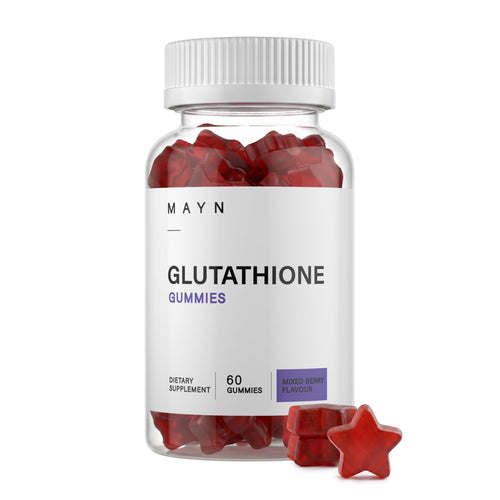
L-glutamine is the most abundant free amino acid in the human body. It's classed as conditionally essential: the body normally makes enough, but needs can change. It's found in protein foods such as meat, fish, eggs and dairy, and in MAYN Glutathione Gummies alongside glutathione, magnesium and zinc.
Type
Conditionally essential amino acid
Claim to fame
Most abundant free amino acid in the body
Food sources
Meat, fish, eggs, dairy, tofu
Not to confuse with
Glutamate or glutathione
Glutamine vs glutamate vs glutathione
| Name | What it is |
|---|---|
| L-glutamine | An amino acid |
| Glutamate (glutamic acid) | A related amino acid, also found in MSG |
| Glutathione | A tripeptide of glutamate, cysteine and glycine |
The similar names cause a lot of confusion. Glutathione is a separate molecule; read NAC vs Glutathione.
Where is glutamine found?
- Beef, chicken and fish
- Eggs and dairy
- Tofu and soy
- Cabbage, beans and spinach (smaller amounts)

Glutamine in supplements
L-glutamine is sold as a powder and appears in blends. MAYN Glutathione Gummies combine glutathione with L-glutamine, magnesium and zinc. See What's in MAYN Glutathione Gummies?
Tip: Check the label for the milligrams of each ingredient per serve.
Frequently asked questions
Is glutamine the same as glutamate?
No. They're closely related amino acids, but they're different compounds.
Is glutamine essential?
It's considered conditionally essential: the body usually makes enough, but needs can vary.
Does glutamine contain MSG?
No. MSG is monosodium glutamate, a salt of glutamate, not glutamine.
Keep reading
This article is general information only and is not medical advice. Always read the label and follow the directions for use. Dietary supplements should not replace a balanced diet. If you are pregnant, breastfeeding, taking medication or have a medical condition, speak with your doctor or pharmacist before taking a new supplement.