Quick answer
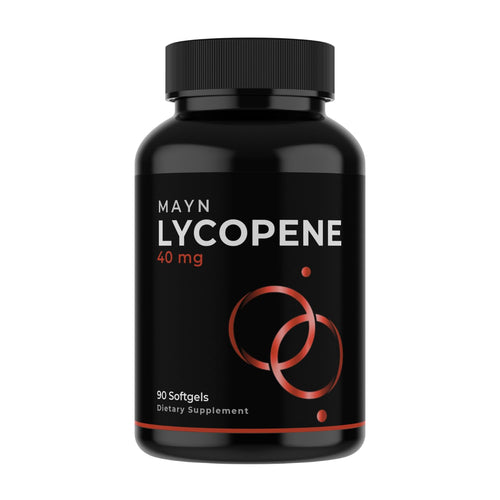
Lycopene is the red carotenoid pigment that colours tomatoes, watermelon and pink grapefruit. Cooked and processed tomato products, such as tomato paste, provide more readily available lycopene than raw tomatoes. Lycopene supplements are sold in softgels, such as 40mg per softgel.
Type
A red carotenoid
Best-known source
Tomatoes
Fat-soluble?
Yes
MAYN product
Lycopene 40mg, 90 softgels
Lycopene in food
| Food | Lycopene |
|---|---|
| Tomato paste | Very high |
| Tomato sauce and puree | High |
| Watermelon | Moderate to high |
| Raw tomato | Moderate |
| Pink grapefruit, guava | Moderate |
Why cooked tomatoes are different
Heating and processing tomatoes breaks down cell walls and can change lycopene into forms that are more readily absorbed. Because lycopene is fat-soluble, eating it with some fat (such as olive oil) also helps.

Why lycopene is sold in softgels
Like other carotenoids, lycopene dissolves in oil, so supplements usually suspend it in an oil inside a softgel.
Tip: Many fat-soluble supplements are taken with a meal. Follow your label's directions.
Frequently asked questions
Is lycopene the same as beta-carotene?
Both are carotenoids, but lycopene is red and isn't converted into vitamin A, unlike beta-carotene.
Do raw tomatoes have lycopene?
Yes, but cooked tomato products provide more readily available lycopene.
Is lycopene vegan?
Lycopene comes from plants or is made by fermentation, but softgel shells may be gelatin. Check the label.
Keep reading
This article is general information only and is not medical advice. Always read the label and follow the directions for use. Dietary supplements should not replace a balanced diet. If you are pregnant, breastfeeding, taking medication or have a medical condition, speak with your doctor or pharmacist before taking a new supplement.